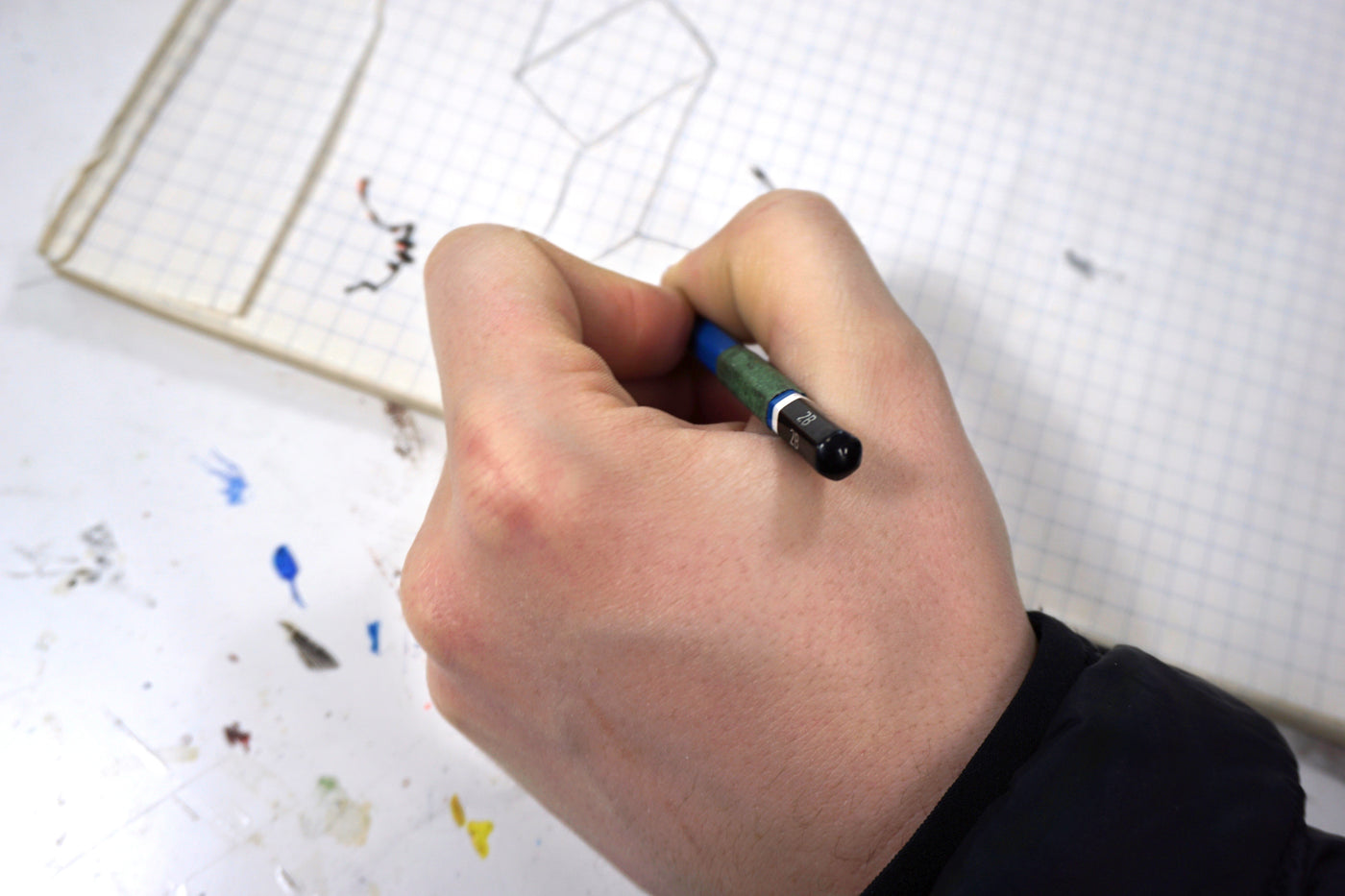
Keep a practice page you can return to
A practice page becomes easier to revisit when its marks have a little context. That does not require elaborate headings, a perfect grid or a beautifully maintained sketchbook. Begin with the drawing question you actually want to explore: a folded corner, a broad pencil mark or a gap between objects. Give it a modest area and leave room for a short note. The page is a working surface, so its organization should support the drawing rather than compete with it. If setting up the page takes longer than making the study, simplify the setup. A date, a subject and one clear question can be enough.
Group related attempts near each other. Two versions of the same corner are easier to compare side by side than on distant pages. Leave a narrow strip between them for labels describing the difference. Use ordinary words such as lower join or lighter edge. Numbering every fragment is unnecessary unless the sequence itself matters. A practice page does not need to imitate a technical manual. Its structure can follow the actual comparisons you made. If a new question appears halfway through the session, begin a separate area rather than pretending every mark belongs to the original plan. That distinction helps preserve what each attempt was trying to discover.
Write observations, not verdicts
After a study, name one visible result. The broad mark covered the plane but obscured the rim is an observation you can use. This drawing is terrible is a verdict without a next action. You do not have to avoid disappointment or praise, but neither should replace a description of the page. Keep the note short enough that you are willing to make it regularly. A full essay after every small drawing can become another obstacle to practice. The aim is a helpful connection between the image and the decision, not a record that looks complete enough to impress someone else.
If you used a particular pencil or paper combination, record it where relevant. Materials matter most when they help explain a specific result. A graphite patch that resisted lifting may deserve a note about the paper; a simple proportion study may not. Do not fill every page with a complete inventory by habit. Likewise, avoid writing a precise duration unless you actually timed the session. A loose note such as short evening study is more truthful than an invented five-minute label. Context should clarify the drawing rather than turn ordinary practice into a set of unsupported claims about speed or performance.
Keep a useful amount of unfinished work
Leave some alternatives visible, especially when they explain a correction. A faint rejected edge can show why the chosen boundary moved. At the same time, remove or separate marks that make the page impossible to read. There is no virtue in preserving every accidental smudge. Ask whether a future look at the page would reveal the question and the main alternatives. If not, add a small label or make a clean fragment beside the crowded area. The working sheet can contain both messy evidence and a concise clarification without becoming a polished presentation board.
When returning to the page, choose one note to act on. If the earlier study says the gap needs comparison, make a new arrangement where that interval is easy to observe. Do not try to correct every open question before allowing yourself a new subject. The page should offer possible next steps rather than a backlog of obligations. You can also decide that a question no longer matters and leave it unresolved. That is an ordinary editorial choice within a personal practice. A record is useful when it supports attention, not when it demands completion of every experiment it happens to contain.
Over time, mark a few pages that contain particularly clear comparisons. The reason for marking them might be an informative mistake, a useful material test or a simple study that answered its question well. Avoid choosing only the most polished images. A returnable practice page earns its place by explaining a decision. Keep its organization modest and its notes concrete, and it can remain valuable long after the object has been put away. The next session can begin with a specific observation instead of the broad hope to draw better. That modest starting point is often enough to give an ordinary pencil and a blank area of paper a clear purpose.