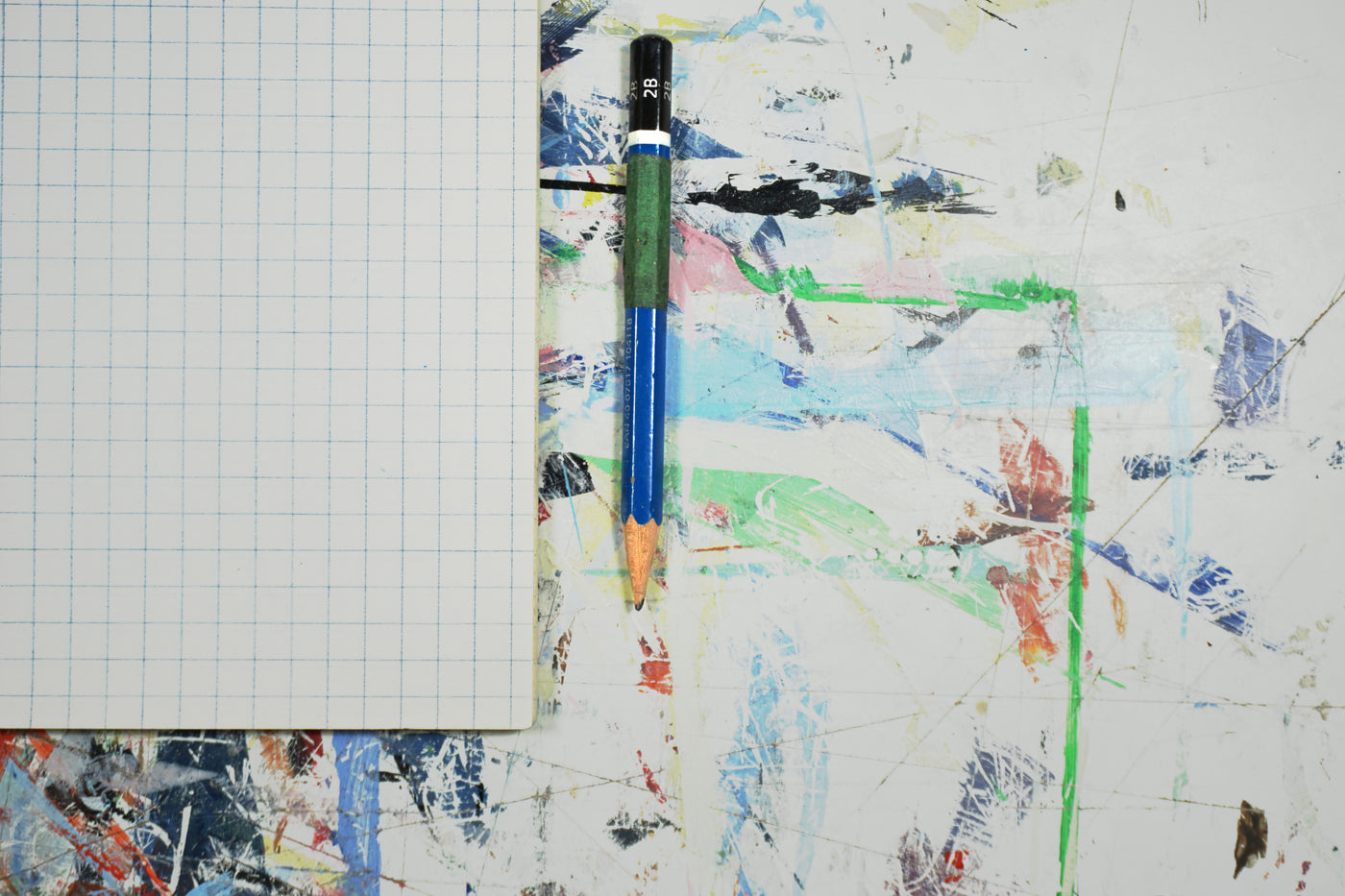
One pencil, several kinds of line
A pencil can make a surprisingly varied page before another tool enters the picture. For this exercise, choose an ordinary pencil that already feels comfortable and a sheet of uncoated paper. The aim is not to discover its official limits or prove that inexpensive materials are better. It is to notice which marks you can ask this particular combination to make. Put the sharpener and eraser nearby, but leave them alone during the first pass. A comparison is easier to read when only one decision changes at a time. Treat the sheet as a set of possibilities, rather than a demonstration of a correct drawing style.
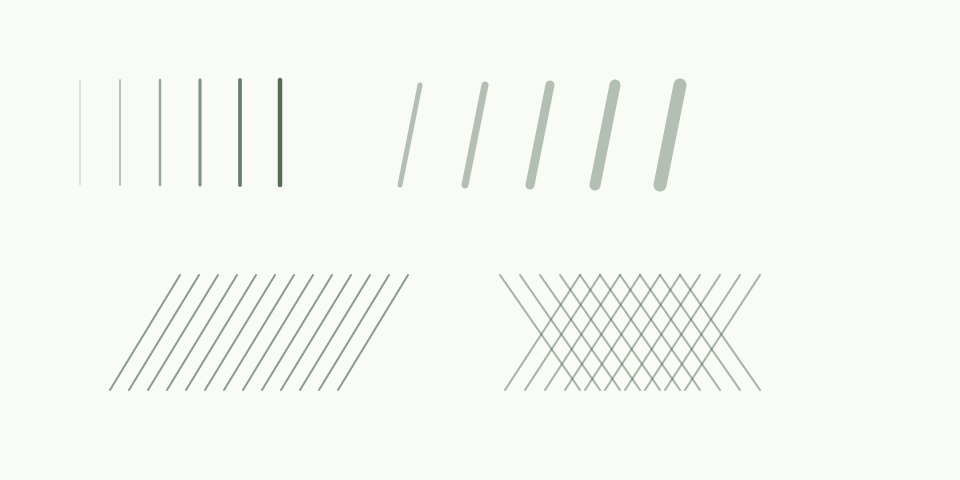
Begin with a loose row of straight strokes, each about the length of a match. Let the first be light enough to remain visible without pressing hard. Make the next slightly darker, continuing only while your hand remains comfortable. You do not need a perfect progression. A cluster of three distinguishable tones is more useful than ten nearly identical ones. Beneath this row, draw another using the side of the point instead of its tip. Keep your written labels beside the marks, away from the graphite. Compare the breadth and texture, particularly at the place where each stroke starts. That beginning can explain an apparent difference in darkness.
Give each mark a job
Now make a square about the width of your thumb. Give its four edges different treatments: a single light stroke, a darker stroke, a broken edge and a broad side stroke. Nothing about the square has changed except its boundary. Ask which edge feels suitable for a distant box, a heavy container, a quick diagram or a barely observed corner. These are personal working choices, not universal meanings. Naming a possible use keeps the exercise connected to future drawings. If every edge looks the same, increase the difference gently rather than bearing down until the paper develops a groove.
A second square can explore direction. Shade one half with parallel strokes and the other with a second set crossing the first. Keep the total darkness approximately similar. The exercise is not a competition between hatching methods. Look for the part that would be easier to continue around an awkward corner or leave open near a highlight. Rotate the paper if a direction feels inconvenient. Write down that decision too. Rotating the sheet is part of making a drawing; there is no need to preserve an uncomfortable position simply because the exercise began that way. Leave a clean margin so the texture remains easy to compare.
Put the comparison to work
Choose a small plain object, perhaps an empty cardboard sleeve or an unprinted envelope. Draw it using only three marks from the comparison sheet. A light line might establish its outer shape, a broad stroke might describe its largest dark area, and a few separate strokes might suggest its surface. Resist adding a fourth treatment merely to make the result busier. This restriction creates a practical question: which mark is missing a job, and which mark is doing too many jobs? If the object remains understandable, your limited vocabulary is already sufficient for this small study. If it does not, change the assignment before adding another tool.
If a sample smears when the side of your hand crosses it, note that practical limitation beside the mark. You can change the order of the strokes or protect a completed area with spare paper. The useful vocabulary includes how a mark behaves during the rest of the drawing.
Keep the comparison beside the finished study and circle the marks you actually used. A beautiful row of samples is less informative than a modest sheet connected to a real decision. On another day, repeat only one portion with a different point or paper. Date the sheet as a personal practice record, without treating it as a measurement of improvement. The useful outcome is a small, visible vocabulary that you can return to when a drawing feels uncertain. Instead of asking which pencil to buy, you can first ask whether the line needs to become broader, lighter, interrupted or more deliberate. That question is specific enough to answer on the page.